The Functions Of Computer Components- P1
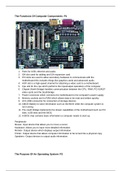
1. Ports for USB, ethernet and audio.
2. ISA slot used for adding and ISA expansion card
3. PCI slots are used to allow secondary hardware to communicate with the
motherboard this includes things like graphics cards and advanced audio.
4. AGP slot is a high-speed channel for attaching a video card to a motherboard.
5. Cpu slot for the cpu which performs the input/output operations of the computer.
6. Chipset (North Bridge) handles communication between the CPU, RAM, PCI-E/AGP
video cards and the Southbridge.
7. Power Connector which connects the motherboard to the computer's power supply.
8. Memory sockets are for RAM which allows data to be read and written quickly.
9. ATA (IDE) connector for connection of storage devices
10. CMOS Battery to store information such as the BIOS while the computer system is
not running.
11. The south Bridge implements the slower capabilities of the motherboard such as PCI
slots, USB slots and the BIOS.
12. A BIOS chip contains basic information a computer needs to start up.
Peripherals-
Mouse- Input device that allows you to move a cursor.
Keyboard- Allows you to input more detailed information.
Monitor- Output device which displays output information.
Printer- Output device that allows computer information to be turned into a physical copy.
Speakers- Output devices to output audio information.
The Purpose Of An Operating System- P2
1. Ports for USB, ethernet and audio.
2. ISA slot used for adding and ISA expansion card
3. PCI slots are used to allow secondary hardware to communicate with the
motherboard this includes things like graphics cards and advanced audio.
4. AGP slot is a high-speed channel for attaching a video card to a motherboard.
5. Cpu slot for the cpu which performs the input/output operations of the computer.
6. Chipset (North Bridge) handles communication between the CPU, RAM, PCI-E/AGP
video cards and the Southbridge.
7. Power Connector which connects the motherboard to the computer's power supply.
8. Memory sockets are for RAM which allows data to be read and written quickly.
9. ATA (IDE) connector for connection of storage devices
10. CMOS Battery to store information such as the BIOS while the computer system is
not running.
11. The south Bridge implements the slower capabilities of the motherboard such as PCI
slots, USB slots and the BIOS.
12. A BIOS chip contains basic information a computer needs to start up.
Peripherals-
Mouse- Input device that allows you to move a cursor.
Keyboard- Allows you to input more detailed information.
Monitor- Output device which displays output information.
Printer- Output device that allows computer information to be turned into a physical copy.
Speakers- Output devices to output audio information.
The Purpose Of An Operating System- P2