AS Computing
Unit 1.7 Database Systems
There are two types of database, Flat-File and Relational. A flat file database is made up of just one
table while a relational database is made of one or more tables linked together. Each record in a
database should have a primary key. A primary key is used to uniquely identify a field, and it must
always be unique.
Repeated data in a database is a big problem because it wastes valuable space, this is also known as
data redundancy.
Advantages of Flat File Databases Disadvantages of Flat File Databases
Easy to understand Less security so it’s easy to extract data
Easy to implement Data inconsistency
Less hardware and software requirements Data redundancy
Less skills are required to create one Slow for huge databases
Best for small databases Searching process is very time consuming
The word relative means ‘considered in comparison or relation to something else – Interlinked’.
Therefore a relational database is two or more files linked together.
Key Components
1. Key Field
a. Uniquely identifies a record
b. No two records have the same data in the key field
c. Also called a primary key
2. Foreign Key
a. A field that appears in a table, that is the primary key of another table and forms a
link between the two tables
Links and Relationships
1. There are a few types of relationships in regards to databases, they are:
a. One-To-One
i. Products and Barcodes at a supermarket
b. One-To-Many
i. A video club member may rent more than one video
c. Many-To-Many
i. Pupils and Teachers in a school
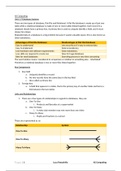
These are represented as so:
Relationship Symbol
One-To-One
One-To-Many
Many-To-Many
Page |1 Luca Passariello AS Computing
Unit 1.7 Database Systems
There are two types of database, Flat-File and Relational. A flat file database is made up of just one
table while a relational database is made of one or more tables linked together. Each record in a
database should have a primary key. A primary key is used to uniquely identify a field, and it must
always be unique.
Repeated data in a database is a big problem because it wastes valuable space, this is also known as
data redundancy.
Advantages of Flat File Databases Disadvantages of Flat File Databases
Easy to understand Less security so it’s easy to extract data
Easy to implement Data inconsistency
Less hardware and software requirements Data redundancy
Less skills are required to create one Slow for huge databases
Best for small databases Searching process is very time consuming
The word relative means ‘considered in comparison or relation to something else – Interlinked’.
Therefore a relational database is two or more files linked together.
Key Components
1. Key Field
a. Uniquely identifies a record
b. No two records have the same data in the key field
c. Also called a primary key
2. Foreign Key
a. A field that appears in a table, that is the primary key of another table and forms a
link between the two tables
Links and Relationships
1. There are a few types of relationships in regards to databases, they are:
a. One-To-One
i. Products and Barcodes at a supermarket
b. One-To-Many
i. A video club member may rent more than one video
c. Many-To-Many
i. Pupils and Teachers in a school
These are represented as so:
Relationship Symbol
One-To-One
One-To-Many
Many-To-Many
Page |1 Luca Passariello AS Computing