NR 509 Week 5 Quiz Questions & Answers.docx
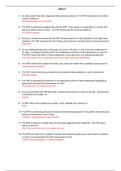
NR 509 Week 5 Quiz Questions & A NR 509 Week 5 Quiz: Questions & Answers An older patient has been diagnosed with pernicious anemia. The FNP knows that this condition could be related to ….. examining a patient who tells the FNP “I sure sweat a lot especially on my face and feet but it doesn’t have an odor”. The FNP knows that this could … related to During an abdominal assessment the FNP elicits tenderness on light palpation in the right lower quadrant. The FNP interprets that this finding could indicate a disorder which of these structures? An Inuit visiting Nevada from anchorage has come to the clinic in July during the hottest part of the day. It so happens that the clinics air conditioning is broken and the temperature is very hot. The FNP knows that which of these statements is true about the Inuit sweating tendencies? The FNP notices that a patient has black, tarry stool and recalls that a possible cause would … ….. an abdominal …. deep palpation is used to determine The FNP is assessing the abdomen of an aging adult. Which of these statements regarding an aging adult and abdominal assessment is true? During examination the FNP finds that a patient has excessive dryness of the skin. The best term to describe this condition is A FNP notices that a patient has ascites, which indicates the presence of The FNP is performing percussion during an abdominal assessment. Percussion notes during the abdominal assessment may include The FNP is caring for a black child who has … with marasmus. The FNP would expect to find the … patient’s medical record that the patient has a lesion that is confluent in nature. On examination the FNP would expect to find The FNP is assessing the abdomen of a pregnant woman who is complaining of having acid indigestion all the time. The FNP knows that esophageal reflux during pregnancy can cause The patient has abdominal borborygmi. The FNP knows that this term refers to A patient has a terrible itch for several months that he … scratching continuously. On examination the FNP might expect to find During aging process, the hair can look gray or white and begin to feel thin and fine. The FNP knows that this occurs because of a decrease in number of functioning The FNP notices that a patient has a solid, elevated, circumscribed lesion that is less than 1 cm in diameter. When documenting this finding the FNP would report this as a During an abdominal assessment the FNP would consider which of these findings as normal? A 52 -year-old Woman has a papule on her nose that has a rounded pearly border and a central red ulcer. She said she first noticed it several months ago and that it is slowly growing larger. The FNP suspects which condition? The FNP is listening to bowel sounds. Which of these statements is true about bowel sounds? The FNP is watching a new graduate FNP perform auscultation of a patient abdomen. Which statement by the new graduate shows a correct understanding of the reason auscultation proceeds percussion and palpitation of the abdomen? A patient is complaining of a sharp pain along the costovertebral angles. The FNP knows that this symptom is most often indicative of The patient is … of having inflammation of the gallbladder or cholecystitis. The FNP should conduct which of these techniques to assess for this condition? A newborn infant is in the clinic for a well baby check. The FNP observes the infant for possibility of fluid loss because of which these factors? During an assessment of a newborn infant, the FNP recalls that pyloric stenosis would … manifested by NR 509 Week 5 Quiz: Skin, Hair, Abdomen Question: The FNP is assessing the abdomen of an aging adult. Which of these statements regarding the agind adult and abdominal assessment is true? Question: The FNP notices that a patient has had a black tarry stool and recalls that a possible cause would be Question: The FNP knows that during an abdominal assessment deep palpitation is used to determine Question: A patient has abdominal borboygmi. The FNP knows that this term refers to Question: During an abdominal assessment, the FNP would consider which of these findings as normal? Question: The FNP is caring for a black child who has been diagnosed with marasmus. The FNP would expect to find the Question: An Inuit visiting Nevada from Anchorage has come to the clinic in July during the hottest part of the day. It so happens that the clinic’s air conditioning is broken and the temperature is very hot. The FNP knows that which of these statements is true about the Inuit sweating tendencies? Question: The FNP is performing percussion during an abdominal assessment. Percussion notes heard during the abdominal assessment may include: Question: During an abdominal assessment, the FNP elicits tenderness on light palpation in the right lower quadrant. The FNP interprets that this finding could indicate a disorder of which of these structures? Question: A patient has a terrible itch for several months that he has been scratching continuously. On examination, the FNP might expect to find Question: The FNP is listening to bowel sounds. Which of these statements is true of bowel sounds? Question: A patient is complaining of a sharp pain along the costovertebral angles. The FNP knows that this symptom is most often indicative of Question: The FNP notices that a patient has a solid, elevated, circumscribed lesion that is less than 1 cm in diameter. When documenting this finding, the FNP would report this as a Question: A patient is suspected of having inflammation of the gallbladder, or cholecystitis. The FNP should conduct which of these techniques to assess for this condition? Question: The FNP just noted from a patient’s medical record that the patient has a lesion that is confluent in nature. On examination, the FNP would expect to find Question: During an examination, the FNP finds that a patient has excessive dryness of skin. The best term to describe this condition is Question: An older patient has been diagnosed with pernicious anemia. The FNP knows that this condition could be related to Question: A 52 year old woman has a papule on her nose that has rounded, pearly borders and a central red ulcer. She said she first noticed it several months ago and that it has slowly grown larger. The FNP suspects which condition? Question: The FNP is watching a new graduate FNP perform auscultation of a patient’s abdomen. Which statement by the new graduate shows a correct understanding of the reason auscultation precedes percussion and palpation of the abdomen? Question: A newborn infant is in the clinic for a well-baby check. The FNP observes the infant for the possibility of fluid loss because of which of these factors?
Written for
Document information
- Uploaded on
- April 23, 2019
- Number of pages
- 5
- Written in
- 2018/2019
- Type
- Exam (elaborations)
- Contains
- Only questions
Subjects
-
nr 509 week 5 quiz questions answersdocx

Also available in package deal